
Since the start of 2025, more and more businesses have been rethinking how they approach sales. Digital marketing alone is no longer enough to deliver the impact it once did. Audiences are actively flooded with ads and pop-ups, making it harder for brands to stand out.
This is where b2b lead generation telemarketing come together. Telemarketing is one of the oldest but most reliable ways to connect with people interested in purchasing exactly what the businesses are offering. Moreover, it adds the “human touch” that emails or social ads cannot.
When you combine it with modern lead generation telemarketing methods, you get a cycle that moves people from curiosity to big purchases.
In this blog, you’ll learn how to master this lead generation cycle in 5 simple steps. Each step builds on the one before, making it easier to attract, convert, and retain customers.
What You’ll Learn in This Guide:
- The 5 steps of the lead generation cycle, explained simply
- How telemarketing and lead generation work together
- Why telemarketing is still effective in 2025
- Common mistakes to avoid in the sales cycle
- How to outsource telemarketing and lead gen for better results
Step 1 – Identify and Attract the Right Leads
The sales cycle begins with finding the right people to target. Not everyone is your customer, which is why if you try to sell to everyone, you end up selling to no one.
For B2B lead generation telemarketing, this is even more important. Businesses don’t have time to entertain random pitches from random people. They want solutions that fit their specific needs and want them to be reliable and their providers trustworthy.
So how do you attract the right leads?
- Use inbound marketing: blogs, videos, and SEO.
- Run targeted ads that speak to a clear pain point.
- Offer something valuable like a free guide, webinar, or tool in exchange for contact details. (lead magnet)
Whilst all this is important, you should always keep in mind that online forms and ads only go so far. Many people sign up without real interest. This is why lead generation and telemarketing work hand in hand. A quick call can confirm if a lead is worth pursuing or not.
When you identify the right audience from the start, the rest of the cycle becomes smoother and cheaper.
Step 2 – Qualify Leads with Telemarketing
Not every lead deserves your sales team’s time. Once you’ve collected leads, the next step is qualification. Some don’t have the budget. Others don’t have the need right now. A few are simply curious.
This is where telemarketing solves a huge chunk of problems. A short conversation can reveal more than any online form. Trained callers tend to ask questions like:
- Do you currently use a similar product or service?
- What’s your budget range?
- How soon are you planning to make a decision?
These answers help filter the leads. Instead of chasing 100 random names, your sales team can focus on the 20 that actually matter because they have shown genuine interest, hence are most likely to convert.
For b2b lead generation telemarketing, this step is a goldmine. For instance, Imagine a software company. Instead of wasting time pitching to small firms with no budget, telemarketers can quickly identify larger companies with real buying power.
Qualification also prevents frustration. Sales reps don’t waste time on dead leads. Customers don’t feel pressured into buying something they don’t need. Everyone wins.
Step 3 – Nurture Trust Through Conversations
Even after qualification, most leads are not ready to buy instantly. They may need more time, more trust, or more education. This is the stage where nurturing happens.
Think about it, people rarely buy after one call. They want to research our competitors and feel confident. b2b lead generation telemarketing helps bridge this gap. Unlike ads or emails, it always gives people the chance to talk, ask, and share any genuine concerns in real time.
Nurturing also provides feedback. Every conversation gives insights into what customers want in general, what worries them, and what stops them from buying. This feedback can improve both marketing and product strategy.
Step 4 – Convert Leads into Appointments & Sales
By now, you’ve attracted, qualified, and nurtured leads. The next logical step is conversion. This doesn’t always mean a sale right away. Sometimes the goal is simply to book an appointment for the sales team and let them handle the conversions.
If you’re looking to work on the conversions part yourself and want to outsource the previous three steps, then read our latest blog on “How to Choose Your Telemarketing Lead Generation Partner in 2025”.
That said, appointment setting is one of the most popular services offered by telemarketing lead generation companies. Here, the telemarketer’s role is simple:
- Confirm the lead’s interest.
- Make sure they are a good fit.
- Book a meeting with the right decision-maker.
This step is important because it saves time and resources. Sales reps don’t need to waste hours chasing people. Instead, they get to walk into scheduled calls with people who are filtered well and already warm and curious.
Conversion is also about timing. Following up too late can kill the deal. Calling too soon may annoy the lead. Skilled telemarketers know how to balance this.
The numbers also prove this. Cold calling may only bring in 2–5% conversions. Warm calling and appointment setting, however, can push results up to 15–30%. That’s why outsourcing this step to experts often delivers better ROI than outsourcing the previous three steps.
Step 5 – Retain Customers & Drive Repeat Sales
Most businesses make the mistake of ending the cycle once the sale is done. But the real money is in continuous retention. Acquiring a new customer can cost five times more than keeping an existing one.
Retention-focused telemarketing targets this very step. Instead of chasing new leads, businesses can:
- Call old customers to check in.
- Introduce upgrades or add-ons.
- Offer loyalty discounts.
- Collect feedback for better service.
This creates repeat sales and long-term loyalty. For example, a telecom company can use follow-up calls to upsell faster internet plans. A SaaS provider can use check-in calls to reduce churn.
The success rate here is impressive. Retention telemarketing often achieves 30–40% results, making it one of the strongest long-term strategies.
Wrapping Up the Strategy
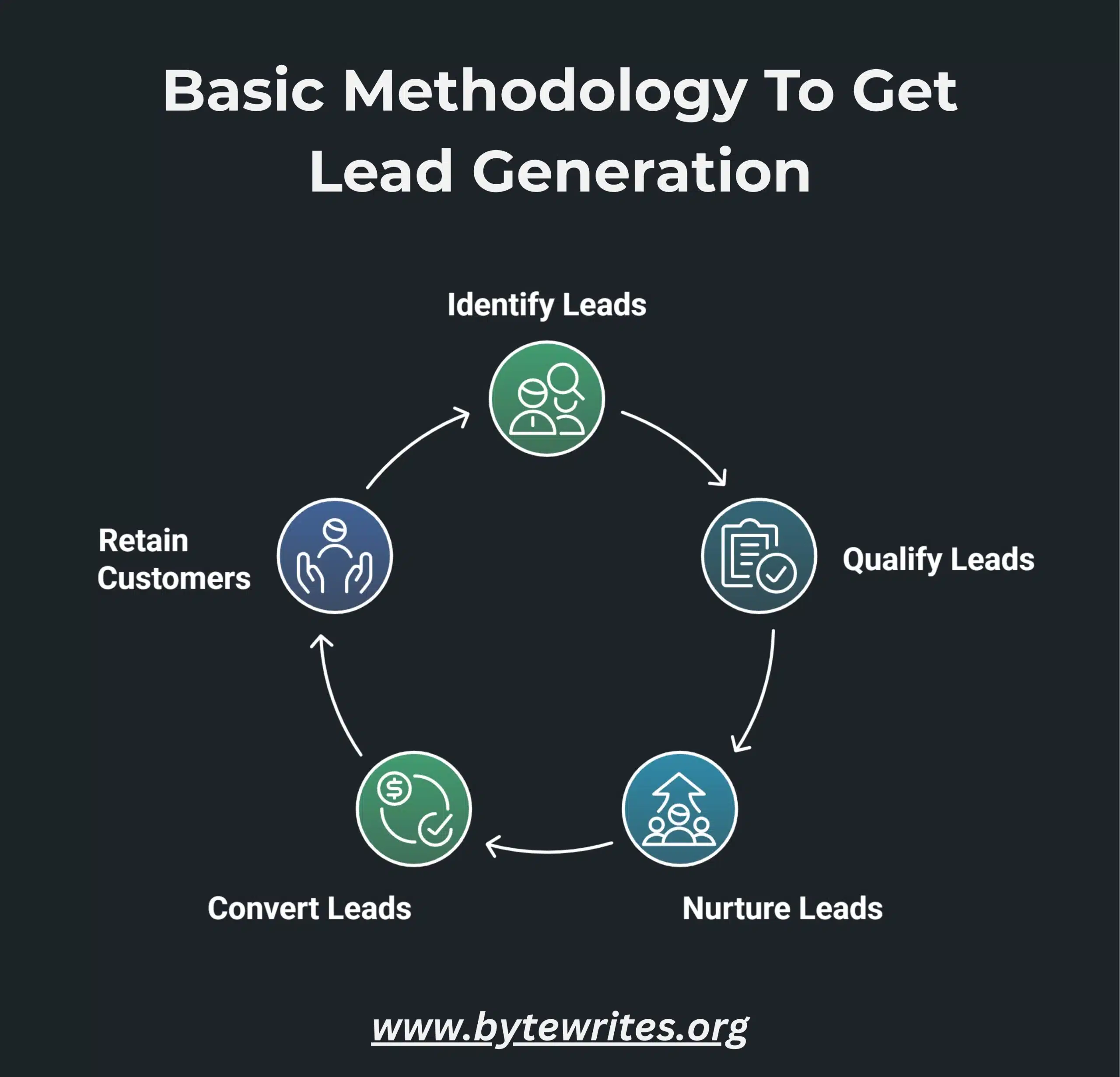
So far, we’ve walked through the 5 easy steps of the lead generation cycle:
| Step | What It Means | Telemarketing Role | Goal at This Stage |
| 1- Identify | Finding the right audience | Cold calls, outreach lists | Build awareness |
| 2- Qualify | Checking if leads are a good fit | Warm calls, initial screening | Filter real prospects |
| 3- Nurture | Building trust & interest | Follow-up calls, info sharing | Keep leads engaged |
| 4- Convert | Turning interest into action | Appointment setting, demos | Close the sale |
| 5- Retain | Keeping customers loyal | Retention & support calls | Drive repeat business |
At every step, telemarketing and lead generation work together. Digital marketing may bring people in, but telemarketing makes sure they are the right fit, nurtures them, and closes the deal.
In the next section of this blog, we’ll explore how these steps connect into a complete sales funnel, the role of b2C telemarketing lead generation companies, and why combining human calls with digital tools creates the best results in 2025.
The Role of Telemarketing Lead Generation Companies
Not every business can handle all of this in-house; in fact, most of them outsource their telemarketing and lead generation to reputable companies like ByteWrites. Telemarketing requires trained staff, time, and the right tools. That’s why many businesses turn to telemarketing lead generation companies.
These companies usually provide:
- Experienced callers who know how to handle objections.
- CRM systems to track every lead and follow-up.
- Scripts and strategies designed for different industries.
- Reporting tools to measure success.
For startups and small businesses, outsourcing can save both money and energy. Instead of building a team from scratch, you can plug into a ready-made system. This lets you scale faster and focus on core business operations.
How the 5 Steps Connect into a Sales Funnel
It’s important to understand that these steps are not random. Together, they form a sales funnel that takes people from awareness to making a decision.
- Top of Funnel (Awareness): This is where cold calling and event outreach work best. The goal is to bring in new names and start conversations.
- Middle of Funnel (Consideration): Warm calls and qualification calls help filter the leads. Here, prospects learn more about your solution.
- Bottom of Funnel (Decision): Appointment setting and follow-up calls push leads towards closing. Retention calls, then make sure the relationship continues.
When seen as a full strategic cycle, we realize that telemarketing and lead generation are not separate activities. They are part of the same journey.
Blending Telemarketing with Digital Marketing
The best results don’t come from telemarketing alone. They come when it’s combined with modern digital strategies.
Here’s how the blend works:
- Digital ads and SEO attract large numbers of leads.
- Telemarketing filters those leads to find the real prospects.
- Emails and content nurture leads between calls.
- Follow-up calls push leads over the finish line.
Think of it as teamwork. Digital tools create awareness. Telemarketing creates trust. Together, they complete the sales cycle.
This hybrid approach is what most successful businesses use today. It’s not about choosing one over the other. It’s about using both to their strengths.
Conclusion
Mastering the lead generation cycle doesn’t need to be complicated. By breaking it into 5 simple steps: identify, qualify, nurture, convert, and retain, you can create a repeatable system that works again and again.
For many businesses, partnering with telemarketing lead generation companies can expedite this process. Whether you manage it in-house or outsource it, the key is to stay consistent and measure results.
So, if you’re ready to take your sales process to the next level, start mastering these 5 steps today. Your future customers are waiting for that call. If you’re interested in completely outsourcing your b2b lead generation telemarketing burden to a reliable partner, contact ByteWrites today and evaluate your decision by getting a first consultation for completely free. (Limited time offer.)
Want to get to know some other tips, tricks, and strategies related to telemarketing? Then read our latest blog on “What Is Lead Generation and Telemarketing? Tips, Tricks, and Strategies.”
FAQs
How do I land clients and deliver quality leads when I’m just starting in lead generation?
- Use cold outreach plus networking (LinkedIn is popular) to find your first clients.
- Use tools for data (directories, email verifiers) to ensure lead quality.
- Be consistent and transparent to build trust.
What is the biggest challenge people face with lead generation and telemarketing?
- Not knowing clearly where leads come from (which channels).
- Poor lead quality: leads may lack budget, need, or decision-making authority.
- Messaging: not resonating with the lead’s real pain points.
What lead generation method has statistically brought in the most success?
Many mention that telemarketing / cold calling (especially in B2B) still gives one of the best ROIs. Others compare cold calling with digital channels like email campaigns, paid ads, etc., noting that combining methods often improves results.
Is cold calling still effective compared to other lead generation and telemarketing strategies?
Yes, cold calling gives immediate feedback and a direct human connection. Though more challenging and often more effortful, with good training and targeting, it can outperform many email-only strategies.
How can I generate leads for a small business, and how do I convert them into sales?
Use affordable tactics: content marketing, social media outreach, ads, and local SEO.
Once leads arrive, prioritize follow-ups, qualify leads properly, and use consistent contact (calls, email, messaging) to push them toward sales.
Additional Resources:
- The role of AI in Modern Telemarketing lead generation services
- How to Use Emails to Boost Telemarketing and Lead Generation
- Ultimate guide on b2b lead generation telemarketing tools for 2025
- Ultimate Guide to Start Telemarketing Lead Generation from Scratch
- What Is Lead Generation Telemarketing? Tips, Tricks, and Strategies
- How to Choose Your Telemarketing Lead Generation Partner in 2025