
Ever since the rapid evolution of content creation in 2025, content marketing is no longer about creating simple blogs or videos; it’s about birthing experiences that resonate with the right audience at the right time. And how this is accomplished depends on the kind of business in action.
This is why there is a big difference in how b2b and b2c businesses target their audiences. While both types of businesses want as many people as possible to convert, the strategies they use to get there are where most differences are found. Success stories of brands like HubSpot, Adobe, Salesforce, Nike, and Spotify disclose these differences, along with tips on what works and what to steer clear of.
By studying them, we get to learn valuable lessons related to better strategies. We can then choose to apply them with the help of professional b2b content marketing services or by refining our own b2c content marketing strategy. In this blog, we’ll explore real-world b2b and b2c content marketing case studies that show what worked and why.
The b2b Content Marketing Landscape in 2025
Unlike b2c marketing, buyers in this space don’t make quick, emotional choices. Instead, they evaluate options carefully, take their time, and need multiple reliable options and budget approvals.
This is where b2b content marketing businesses and consultants come in. Their job is to create strategies that not only capture attention but also nurture leads throughout the b2b content marketing funnel. These streams often include:
- Long-form blogs, white papers, and research reports are often used by businesses in the information stage to describe themselves and show that they can be trusted.
- Case studies, guides, and classes are important tools to show knowledge and proof of success during the consideration stage.
- Finally, when they are ready to make a choice, demos, talks, and texts that focus on ROI give them the confidence to do so.
Businesses can regularly generate b2b leads through content marketing by making sure that their content fits with each part of the trip. This makes them become trusted mentors.
Case Study 1: HubSpot’s Blog Hub and Educational Content
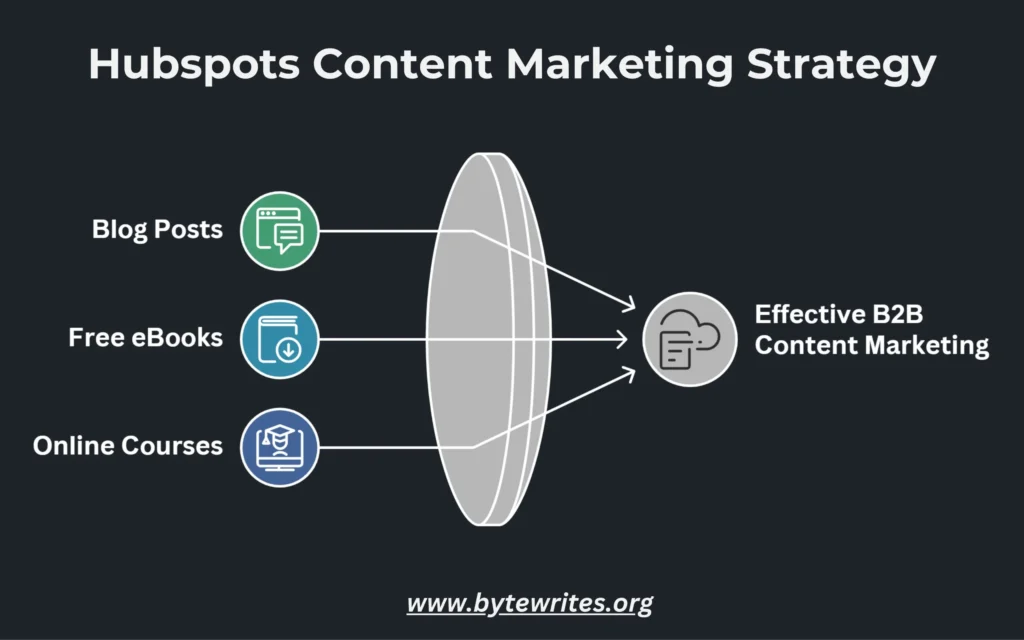
HubSpot stands out as a classic b2b content marketing strategy example because it focuses on education over promotion. Their method is easy yet powerful:
“Make thousands of blog posts, free eBooks, and courses that address everything from lead creation to CRM management.”
Within the funnel,
- Blog posts spark attention,
- Lead magnets like guides encourage thought,
- And product demos secure conversions.
The result is a strategy that draws millions of visitors monthly while cementing HubSpot’s impact in marketing automation. By promoting teaching, HubSpot shows that the best way to sell is by building trust and becoming the go-to resource in your business.
Case Study 2: Adobe’s Storytelling with Case Studies
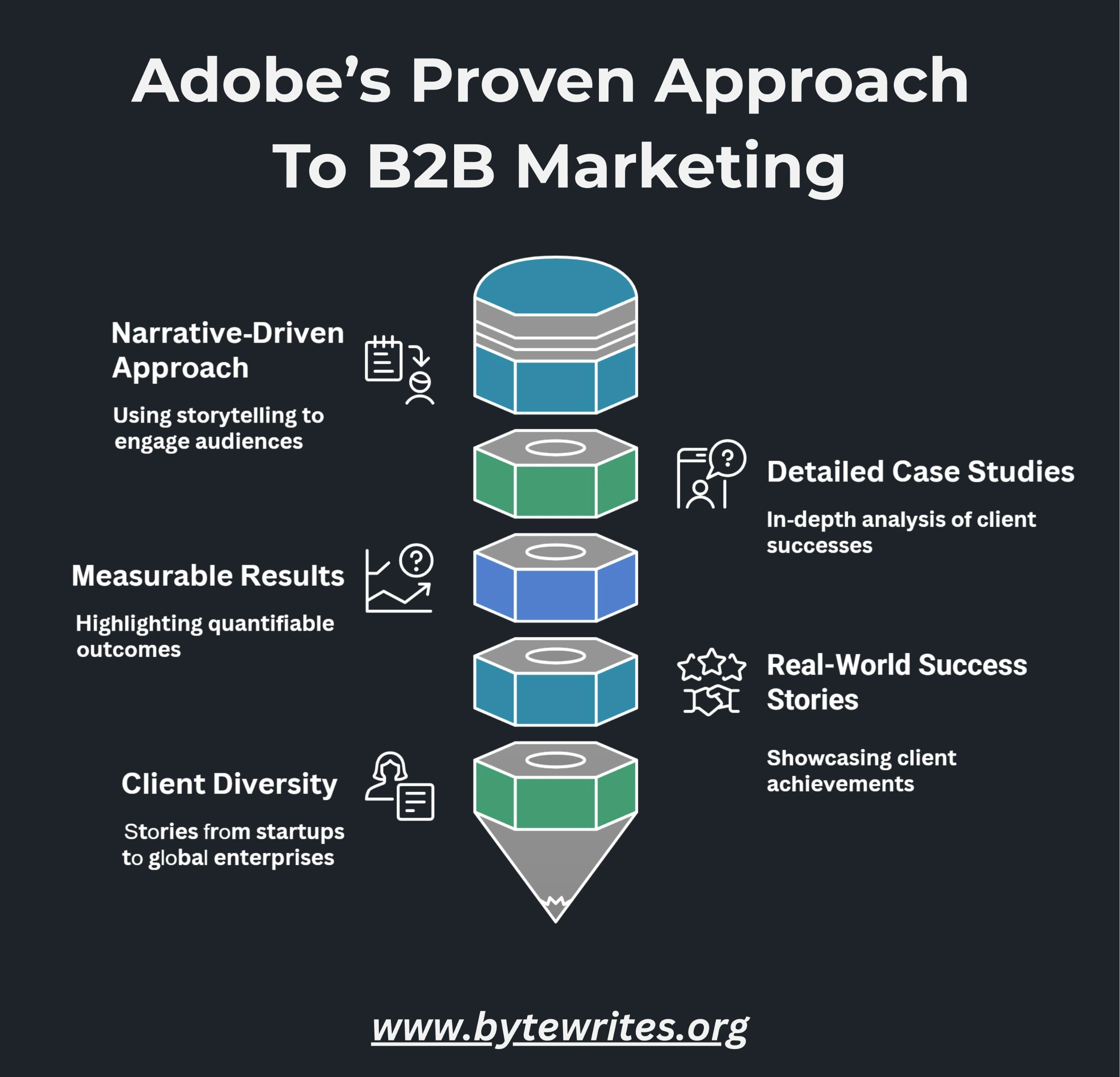
Adobe takes a more narrative-driven approach to content marketing. Instead of simply listing product features, Adobe shows what’s possible by showing real-world success stories.
Through detailed case studies, the company shows how clients ranging from startups to global enterprises use its tools to achieve measurable results.
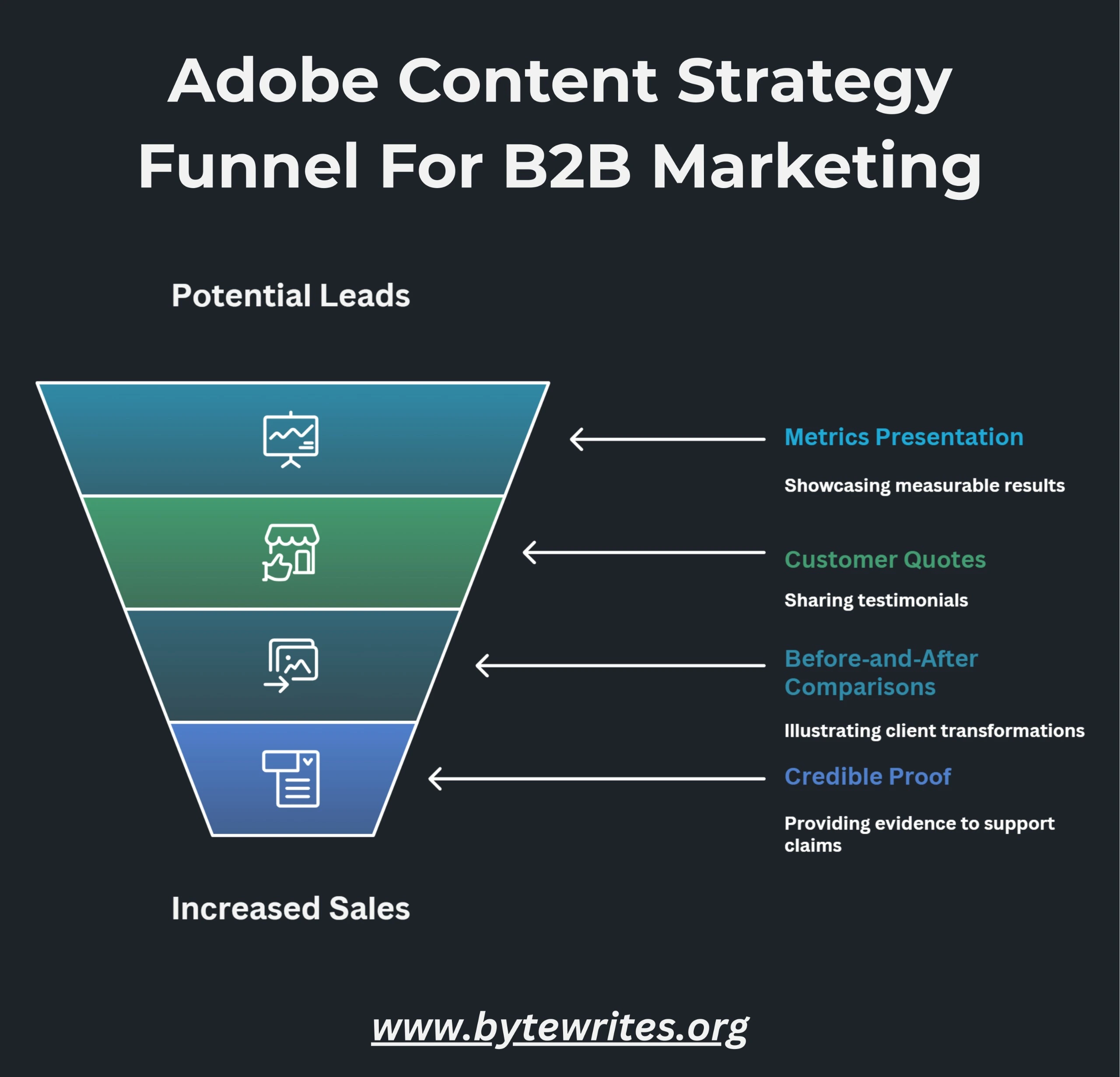
- These stories often include metrics, customer quotes, and before-and-after similarities, which give leads real proof of impact.
- Within the funnel, this case study plays a key role in the consideration stage, where decision-makers seek credible proof before going forward.
- This approach not only helps Adobe make more sales but also reinforces its image as a leader in digital creativity and marketing technology.
Businesses often hire a b2b content marketing consultant to help craft stories like these. The combination of numbers, visuals, and human stories creates an emotional connection while satisfying logical decision-making.
Case Study 3: Salesforce’s Thought Leadership Strategy
Salesforce has become known for being more than just a CRM tool; it positions itself as a guide for the future of business and customer connections.
Instead of only talking about its product, Salesforce gives helpful insights through research, big events, and online webinars. One of its most famous resources is the “State of Marketing” report, which many businesses use to understand industry trends. In the sales journey, these tools work at different stages:
- Research reports grab attention.
- Webinars keep people interested.
- Personalized demos help seal the deal.
This method not only brings Salesforce new customers but also builds its reputation as a trusted leader in business and technology.
A b2b tech content marketing agency often recommends thought leadership because it builds authority while fueling content marketing b2b lead generation. It positions the brand as a guide, not just a vendor.
Want to learn more about kick-starting your content marketing journey? Then read our latest blog on, “Kickstart Your B2B Content Writing Journey: All You Need to Know”
The b2c Content Marketing Landscape in 2025
b2c operates differently. Here, buyers are individuals who often act on impulse. The content has to grab attention quickly, trigger emotion, and encourage fast decisions. Funnels are short, sometimes moving from awareness to purchase in minutes.
Key features of successful b2c content marketing in 2025 include:
- Emotional hooks (relatable stories, humor, or trends).
- Short-form video on TikTok, Instagram, and YouTube Shorts.
- Personalization through AI-powered recommendations.
- Influencer collaborations to build trust.
Unlike b2b, where content often builds credibility over months, a b2c content marketing strategy thrives on speed and impact.
Case Study 1:
Nike’s TikTok Challenge
In 2025, Nike launched a TikTok challenge to engage their audience with fitness and creativity. They invited people to share their own workout routines while wearing Nike gear. And to kick things off, Nike teamed up with popular influencers, which encouraged thousands of fans to join in and create their own videos.
The campaign worked amazingly well:
- Awareness grew quickly as the challenge went viral.
- Trust was built through influencers’ participation.
- Limited-time discounts encouraged people to buy as quickly as they could.
The result was a huge increase in engagement and brand visibility and a direct boost in sales. A b2c content marketing strategy that taps into cultural trends and encourages user participation can multiply engagement while driving conversions at speed.
Case Study 2:
Spotify Wrapped; Personalization at Scale
Spotify Wrapped has grown into a world event that fans look forward to every year. The campaign gives each listener a personalized recap of their music habits, from top songs to favorite acts, wrapped in bright visuals and fun storytelling.
This personal touch makes every user feel special and encourages them to share their results on social media. The funnel works naturally:
- Awareness spreads as millions of people post their Wrapped results,
- Consideration grows as users dive back into the app to explore their playlists,
- Loyalty deepens as fans proudly recommend Spotify to friends.
The outcome is viral engagement, higher app downloads, and long-lasting customer relationships. Personalization is the backbone of a successful b2c content marketing strategy. By showing customers they’re understood, brands create deep loyalty that outlasts a single campaign.
B2B vs B2C Campaign Takeaways
When comparing the five case studies side by side, the differences between b2b and b2c become crystal clear:
| Topic | In b2b Content Marketing | In b2c Content Marketing |
| Funnel Length | Long, research-heavy, and designed for nurturing leads through the b2b content marketing funnel. | Short, emotional, and focused on quick wins. |
| CTAs or Decision Drivers | Logic, ROI, and long-term relationships. | Emotion, relatability, and instant gratification. |
| Content Formats | Whitepapers, case studies, webinars, and reports. | Social media reels, influencer campaigns, and personalized content. |
| Execution Support | Often rely on b2b content marketing agencies for long-term strategies. | Rely on agility, trends, and in-house creativity. |
Conclusion
In 2025, HubSpot, Adobe, Salesforce, Nike, and Spotify all ran campaigns that used the best rule of b2b marketing:
“Know your audience and make campaigns that talk to them in their own language.”
This tells us that to be successful in b2b, you need to be patient and trustworthy and tell stories that are based on authority. And for b2c, speed and emotion are the winning factors.
So whether you invest in getting professional b2b content marketing services or building an in-house team for b2c, your success will depend on perfectly aligning your goals with your audience’s mindset. Brands that master this balance will see stronger results, deeper trust, and sustainable growth.
Are you also interested in learning about the top trends coming in content marketing? Then read our latest blog on “Top Trends & Tips for b2c and b2b Content Marketing Services”
FAQs:
What is the best content for b2b marketing?
Formats like blog posts, whitepapers, case studies, webinars, and research reports. The idea is to pick content that matches where your audience is in the journey.
How do you adjust messaging when switching from b2b to b2c content creation?
Shifting from in-depth, logic-driven content to simpler, more engaging content. Use emotional hooks, shorter formats, and clearer value statements.
What makes a successful b2b content marketing strategy?
It’s about consistently delivering value (helping solve problems), using diverse formats, promoting content well, and measuring what works. These are also the essential elements of a b2c content marketing strategy.
What types of content perform best for b2b?
Content like case studies, guides, webinars, podcasts, and blog posts that address specific pain points is highly rated because it builds trust and credibility.
How does content marketing actually work for a small b2b business?
The advice includes starting with understanding who your audience is, creating content that educates, using lead magnets like white papers or webinars, and tracking which content brings in the right leads.